3 ways to start thinking creatively
-
 Tom Parson
Now more than ever you need to learn to think for yourself, have your own ideas, form your own opinions. To strengthen that which is uniquely human and uniquely you. To be a creative thinker.
It's easy to leave creativity to the creative types and say to yourself, "I'm just not a creative person."
The fact is that in a complex, dynamic, competitive knowledge economy, it's no longer acceptable to take this position.
If you are a knowledge worker, you must become, to some degree, comfortable with being creative.
- Gamestorming
If you search online or ask AI "how to be more creative," the answers usually assume you're a creative person stuck in a rut. You'll get advice on creative exercises that reinvigorate stalled writers, or daily drawing habit building, or seeking inspiration through art.
Or, you may find some of the many studies on how to design your environment to foster creativity. For example, some things that have been found to increase creative thinking are walking, dancing, and yoga, walking up and down the stairs, listening to music, background noise, and perhaps surprisingly for some, using AI. I've written before about how to use sound for more creative meetings.
But what do you do if you consider yourself someone who isn't even the slightest bit creative?
When there's no baseline creativity to increase?
3 ways to start thinking creatively

1. Realise you are already creative
First of all, let's redefine creativity. Creativity isn't drawing, or writing, or making music.
At least, it's not only those things.
There are many definitions of creativity, but at Big Echo, creativity is simply responding with something new and valuable.
Creativity is navigating a difficult conversation with tact. It's finding a way home after your train is cancelled. It's choosing how to pair your new top with something from your wardrobe. As well as expressing yourself with paint on a canvas.
You are already being creative hundreds of times each week.
You're creative any time you need to respond to life by coming up with a new way, a new idea, a new approach.
'New' relative to the moment you find yourself in now, not in the context of all the ideas that have ever existed.
Creativity is always available to you. And there are ways to surface that creativity and leverage it more intentionally.
2. Detach yourself from the status quo
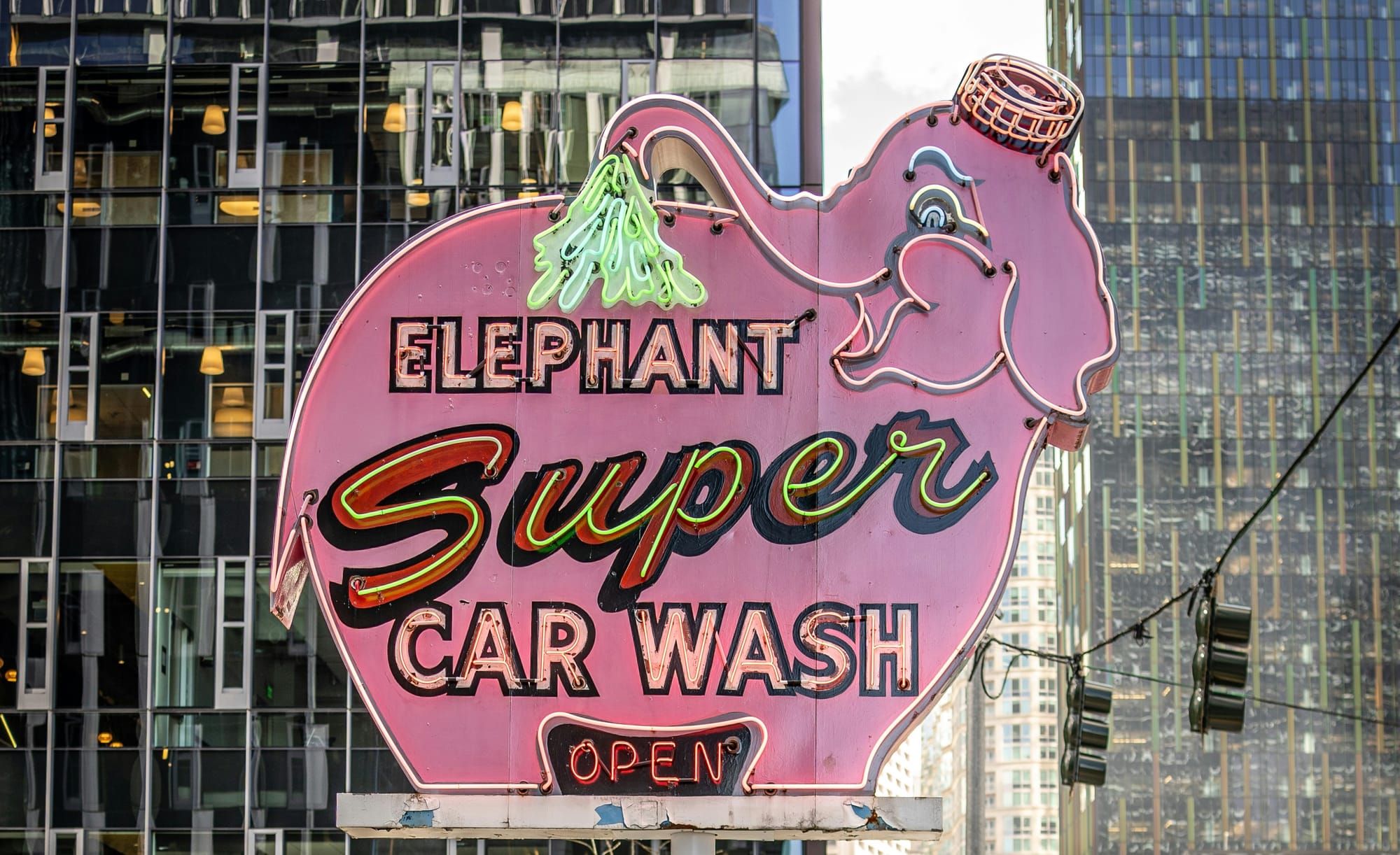
Don't think of a pink elephant.
It's incredibly difficult to come up with your own ideas when your mind is surrounded by other people's ideas.
For example, a key part of using AI to be more creative is to not ask the AI for a solution to the problem.
You may intend to use this as a "jumping off point" which you will adapt and develop. But in reality, you can't "unsee" the AI's solution, and all of your thinking is then in the context of that solution, rather than coming at the problem from your unique perspective.
You need to foster your own creative approach, the way that only you can think about things, with all of your experiences, perspectives, background and proclivities. The things that feel natural and obvious to you - don’t inhibit yourself from doing those. You might find that others don’t actually think in that way, and that's what makes your approach unique. That is precisely what is going to be become increasingly valued in an AI world.
Take time to seek out spaces that remove as much status quo as possible. Move away from social media. Avoid the news. Don't consult your past notes and ideas.
Go towards something new.
This might be as simple as closing your eyes and breathing for a few seconds. Or walking, meditating, or going for a drive. Detaching yourself from the everyday.
Or it might be less about removing and more about replacing your usual surroundings with something totally different. New people, new perspectives, new challenges. Bonus points if the new environment has absolutely nothing to do with your work. (That's the point!)

3. Enjoy not knowing
You may find periods where you don't feel challenged. You show up to work each day, going through the motions, feeling like you know exactly what's going to play out before it happens.
In these situations, you have minimal opportunities to be creative. Because creativity happens in the space where you don't already have all the answers.
When you're presented with new information, new environments, new perspectives. When you need to make use of limited resources or time constraints, in a way you haven't done before.
Think of an escape room: a new and unique environment which forces you to think creatively to escape. How many people pay to do the same escape room twice?
Find opportunities to be intentionally creative by seeking out the escape rooms of your own life. Situations where you don't know the answer, but you know that the process of finding the answer is going to be rewarding.
This can be done in online spaces, through games, meet-ups, or any number of other means.
Just start being creative
I love Oliver Burkeman's thoughts on perfectionism and his idea of 'toxic preconditions':
- "I'll start doing that when..."
- "I'll just wait for..."
- "I can't do that until..."
In his book Four Thousand Weeks, he gives the example of someone who wants to "be the kind of person who does yoga." They go out of their way to set up all the things they think a person who does yoga has. They buy a yoga mat, a scented candle, they wait until they have the house to themselves, they clean the house so they can relax in it, they clear their mind of any thoughts, and by that point they've run out of time as the kids are due back any minute.
Burkeman points out that in order to be someone who does yoga, you only have to do one thing: yoga. You can start right now, and just do one yoga pose, for 1 minute, and you are now someone who does yoga.
Don't wait for the perfect preconditions to start being creative. The three things above can be done right now in your chair, or on your commute, or wherever you are when reading this.
Which of these can you do today to start strengthening that creative muscle?