

Many people see AI as a threat to critical thinking and creative problem solving.
Some believe it makes us lazy - that we’ll soon become overly reliant and no longer be able to think for ourselves.
And the ‘shadow AI’ challenge is real. People are using AI at work whether we like it or not - they’re experimenting - often due to the pressure to meet demands and streamline their work.
A recent World Economic Forum report named creative thinking, analytical thinking, and curiosity as among the top skills for workforces over the next 5 years.
And yet studies have recently shown AI may be causing us to lose the mental sharpness these skills rely on.
Can we embrace the use of AI across teams, in a way that doesn’t threaten these vital human skills, but in fact enhances them?
The key lies in using AI not to give us the answers, but to ask better questions.
Our current ways of working are broken
Picture the scene: a monthly review meeting in a grey board room. You gaze longingly at the clear blue skies outside while the conversation goes round in circles.
You could contribute, but it would be an uphill battle and your opinion would likely get lost in the fray.
You know how it goes by now - decision by committee, another solution nobody asked for, that will need rethinking in 12 months anyway.
You’re not even entirely sure everyone agrees on the problem we’re trying to solve…
Should we turn to AI?
It can be tempting to offload all of this thinking onto an AI. You’re tired, you’ve tried everything, what could be the harm?
We could brain dump the problems we're facing and ask it to come up with a solution. Instead of bringing in collaborators, experts or colleagues, surely we could ask AI instead?
But because of how LLMs like ChatGPT, Copilot or Gemini are trained, when we rely on AI to give us the answer, we risk converging on the average - the most middle-of-the-road response - the lowest common denominator.
We lose what makes us unique - our intuition, context, and deep industry experience - and overlook our best problem-solving tool, the human brain.
Rather than replacing our teams, we need to learn to use AI to support and enhance them.
Using AI to enhance, not replace
LLMs aren’t just for simple prompts - we can bring them into the room to reinvigorate the process:
- Reframe problems into opportunities by taking a series of complex problems and turning them into a simple “How Might We” statement.
- Act as devil’s AI-dvocate in discussions - asking challenging questions nobody had thought of.
- Challenge assumptions by quickly validating claims, researching existing solutions and finding past examples.
- Identify blind spots in process design, service workflows, or customer experience design.
These are low-cost and high-return uses of AI which don’t replace human creativity, but instead give it a platform on which to thrive.
Mindset shift: more human, with AI
Working with AI in this way gives us opportunity to improve our:
- Creative thinking - using emerging tools in new ways
- Analytical reasoning - critically assessing each AI response
- Curiosity - learning to write better prompts means learning to ask better questions
It’s a mindset shift away from the instinct of “we don’t need tech to help us do that” towards confidently using all resources available to us - AI included.
When teams see that AI can help to ask better questions, spot contradictions, or bring fresh perspectives, things change.
They begin to see that using AI isn’t about replacing them, it can be about making them more confident, capable and curious.
2 ways to try this tomorrow
Try using AI in new ways with one of our plays below.
6 ways I'm using AI to be more creative
Practical ways I'm using AI to think creatively, get out of ingrained patterns and consider new perspectives. From my interview with Dr Rachel Connor.
Better problem framing with AI
Brain-dump a sticky problem you’ve been grappling with into ChatGPT, and ask it to turn it into a “How Might We” statement. This can form the basis of a team ideation session.
Devil's AI-dvocate
Run your next strategy meeting with ChatGPT in the room, share the meeting notes and ask it “What might we be missing?”
Curious about AI?
At Big Echo, we help you explore AI in a hands-on, risk-free way - making AI less of a threat, and more of a collaborator.
At community events, we discuss AI among other opportunities and challenges.
Read next
Quick Reads · 3 mins
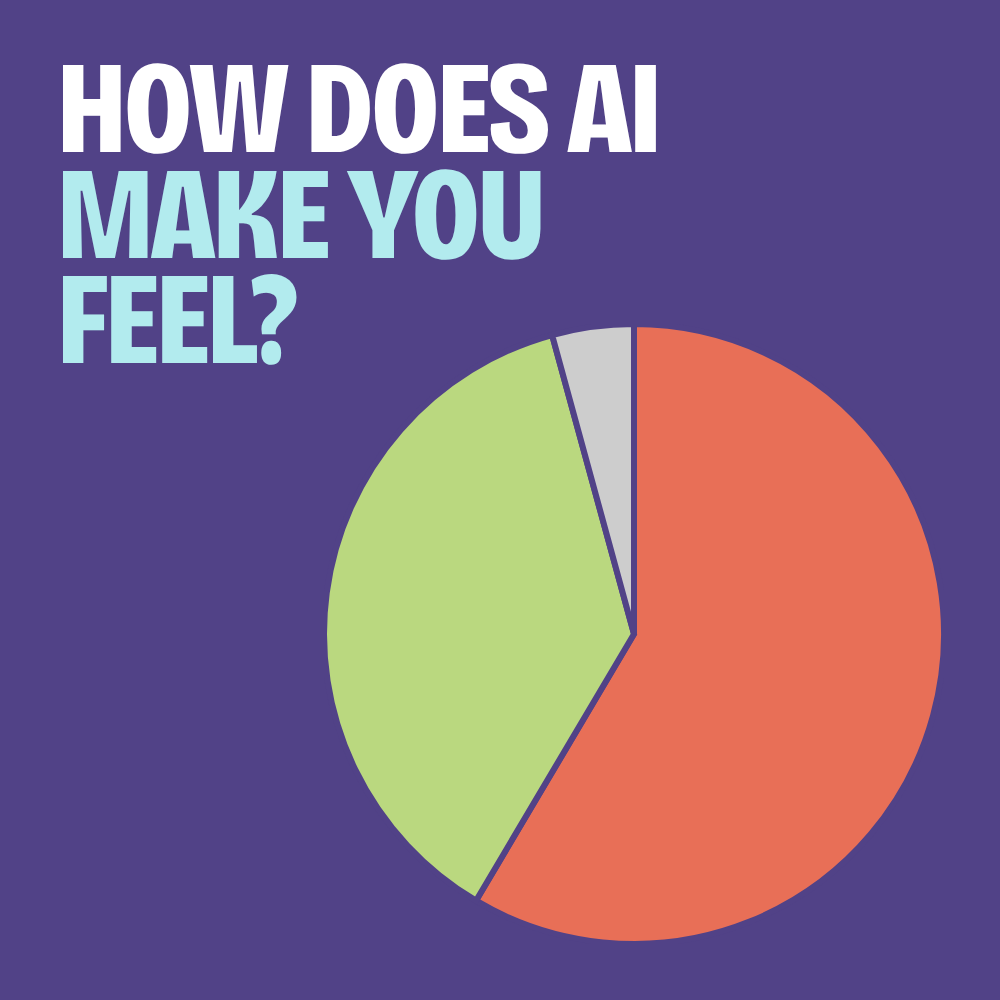
Queer Resilience for an AI Age: The Numbers
During a recent conference masterclass session, we explored how LGBTQ+ people are feeling about AI, and what it means for the leadership of their teams.
News · 2 mins
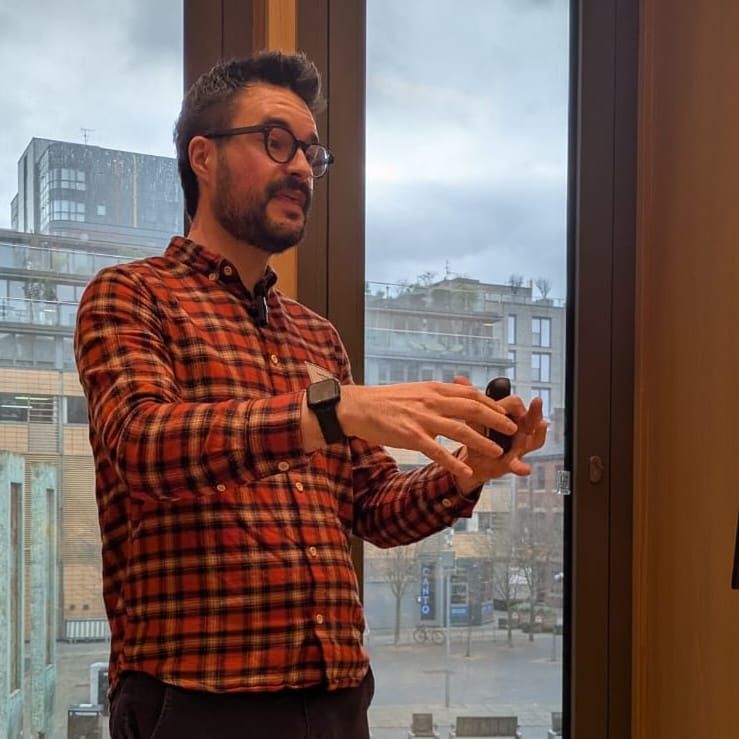
Queer Resilience for an AI Age
When tech can do the tasks we've built our careers around, where does our value lie? In this interactive session, Tom demonstrates how LGBTQ+ resilience is more important than we might think for leading teams into an AI age.
Quick Reads · 2 mins
Changing too much at once
When a problem arrives, it’s tempting to throw every fix at it at once. But if it works, can you say why? The case for changing one thing at a time.