In defence of generalists
-
 Tom Parson
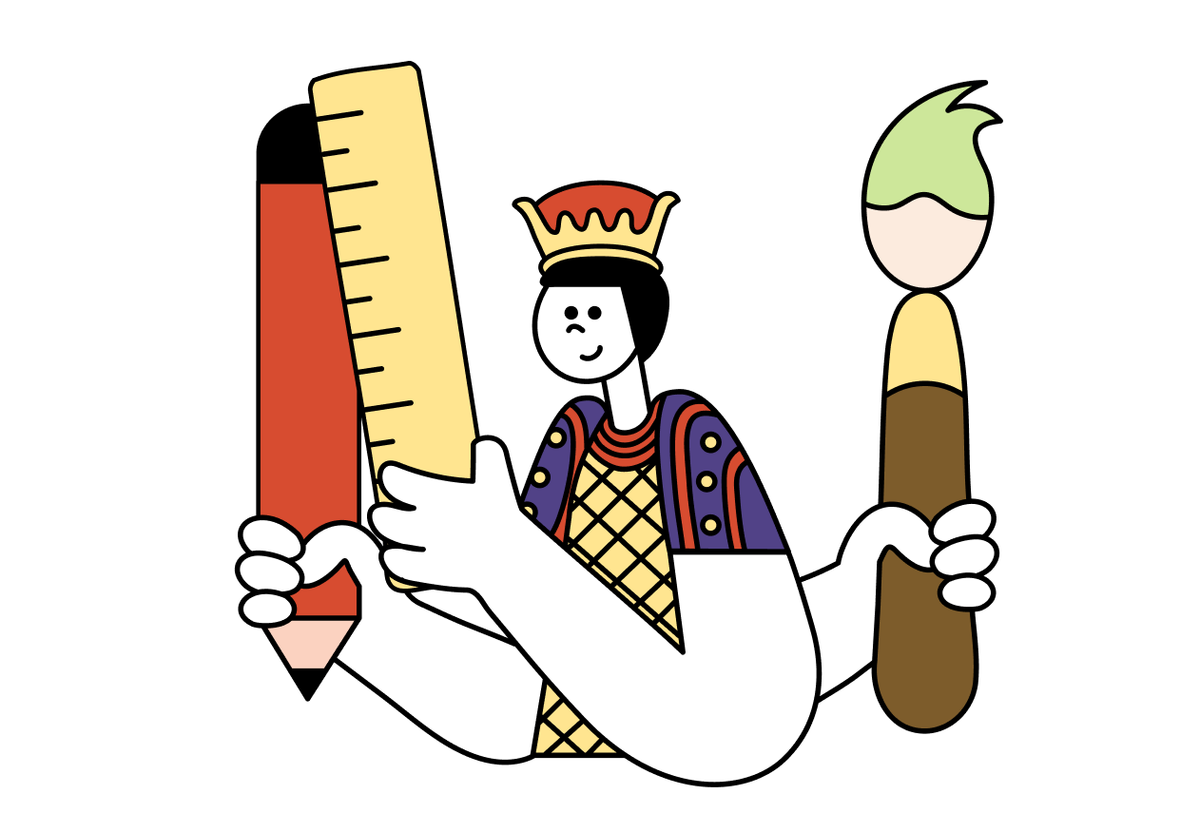
As early as childhood we're encouraged to specialise: "What are you going to be when you grow up?" But in a world with more and more ways to learn, create and get things done, the generalists' time is now.
I can see the case for specialists. It takes years to develop a specialist skillset and knowledge base. And because of this, specialists can be in high demand. A specialist can fix a problem faster than others, and charge twice as much.
Social media encourages us to specialise, too. To niche in on our voice, our opinion, our specific audience. Only by creating specific content for specific people will the algorithm know who to feed it to.
As a result, we assume that value is always created by specificity and depth.
Moving beyond specialisms
But I've always resisted specialising. When I was young, I didn't know what I wanted to do when I grew up. I had too many interests.
This was at odds with what I saw around me for a long time - until I started running a business. That's when I met multi-hyphenate entrepreneurs and others who had made a living from their ability to apply themselves in multiple areas.
By being an entrepreneur, I was able to use my myriad interests as a strength - wearing different hats in the business, working with different kinds of clients, and bringing a broad range of experience and skills to the table.
A couple of years ago I saw Jodi Fox speak about personal branding. At the end of her talk, I asked her the question: "I feel like I have too many interests to have a personal brand, how do I tackle that?"
Her response: "It sounds like curiosity is your personal brand." This was such a lightbulb moment for me.
Creating value as a generalist
Recently, a pair of co-founders asked me to help them make sure their new startup business was given the best chance of success possible.
They had a business idea, but hadn't yet decided on a name or really started taking steps to make it real.
They chose me specifically because of my experience across a range of things they needed to consider:
- Strategy and differentiation
- Workshopping ideas
- Validating ideas with real people
- Building a web presence
- Advising on digital marketing basics
- Tooling, automation and processes
- Cofounder relationship and conflict resolution
I wouldn't call myself an expert in any of these fields, and they didn't expect one. They came to me because I have a solid understanding of all of them, how they interact, and where to begin with each.
I'm also able to clearly explain my limitations, and refer onto trusted Big Echo Collaborators when necessary (like with visual branding and logo design, in the case of this client).
Comb-shaped people
There is a concept of T-shaped people, the idea that people have a specialism in one area but a broad baseline knowledge across all areas of a business, making them ideal collaborators. An upside-down T shape.
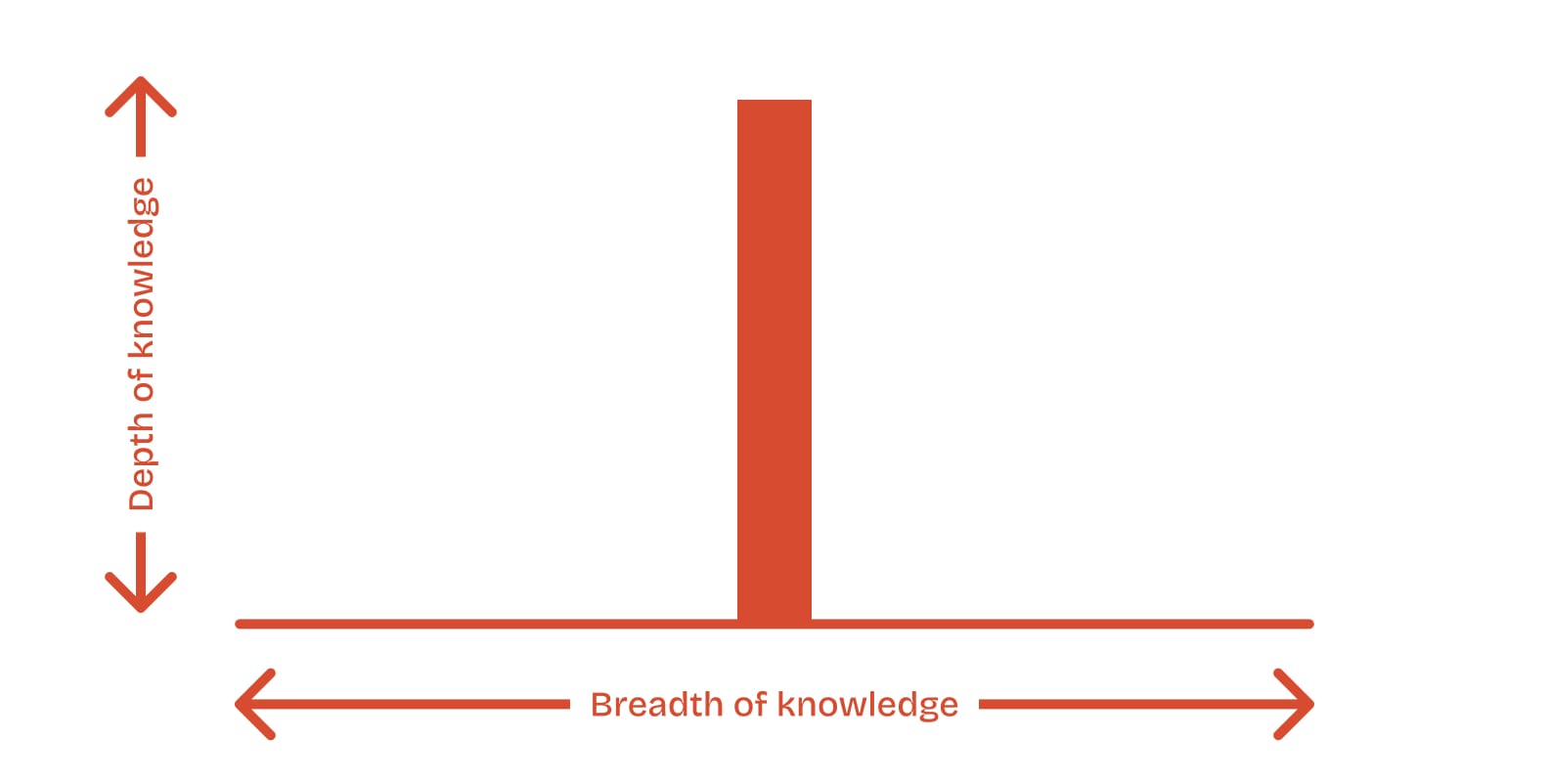
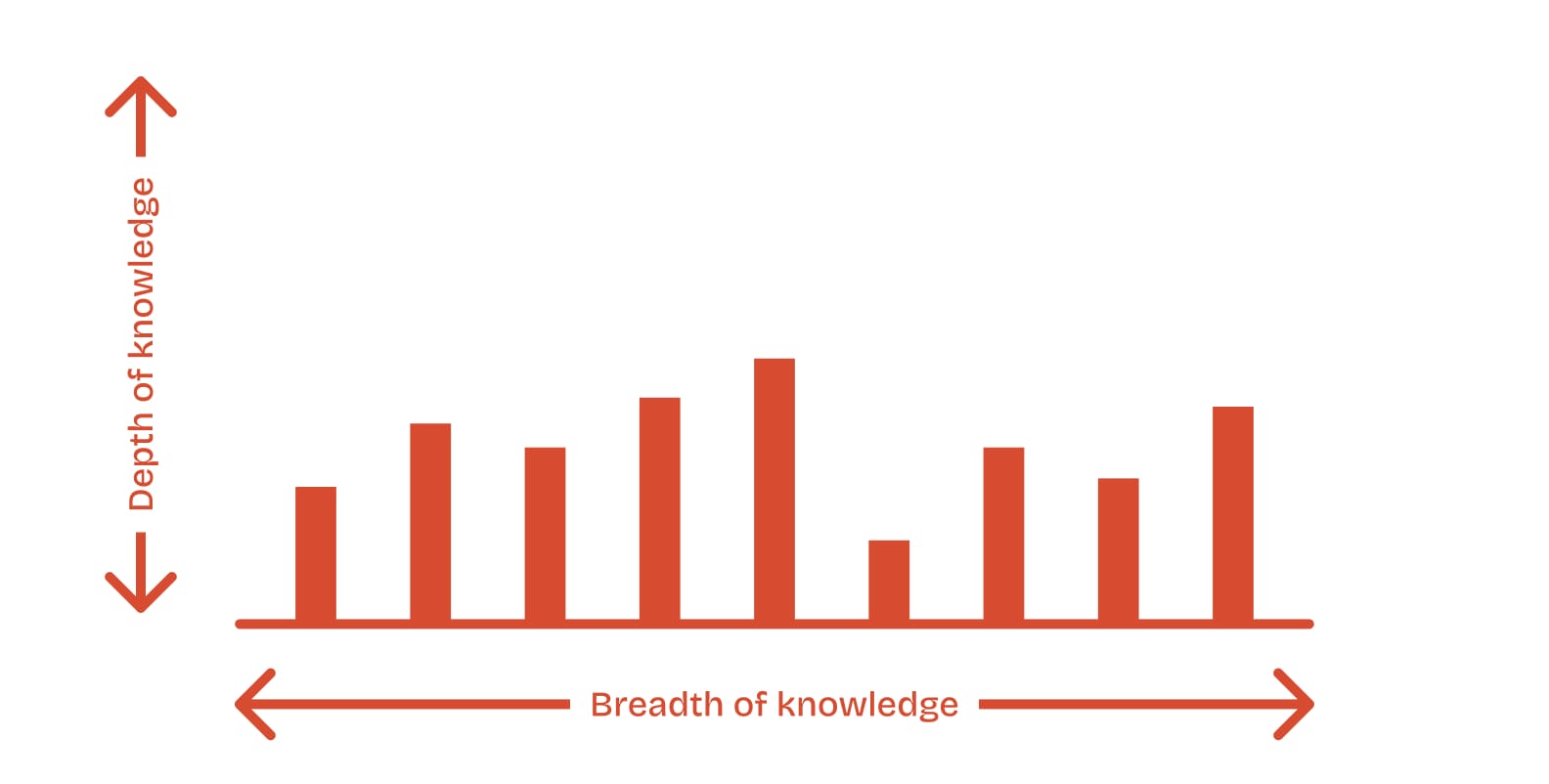
I used to be a strong proponent of this model, but my work with clients in recent years has led me to question its accuracy in today's world. My clients are now often people who have arrived in a particular role or with a set of responsibilities, but who really have skills and experience relatively equally across a few areas.
In my experience, we're less T-shaped and more comb-shaped:
AI is a generalist's dream
AI is rapidly democratising the means of creating, analysing, strategising. Many things that previously needed a specialist can now be done by a layperson using AI.
The output from AI is different - somewhat shallow, often lacking context, and undeniably unoriginal. AI is of course certainly no substitute for deep, nuanced human expertise.
But AI is a generalist's dream. Because generalists already know that they're not going to produce the pinnacle solution in any given area. That's not the value they provide. The value lies in having a baseline knowledge of many things, connecting disparate ideas, and knowing what the first step is in many situations.
Curiosity is a superpower
What I finally learned was that my curiosity isn't a distraction, as I'd been led to believe before. It's actually a superpower - it gives me the ability to seek out knowledge, ask useful questions, see the bigger picture.
Indeed, curiosity is listed in the Future of Jobs Report as one of the essential skills for 2030, alongside imagination and flexibility.
So don't stop learning, even if it doesn't look "relevant" or "useful" at first.
Develop the muscle that makes you able to seek out new knowledge, adapt to change, and continuously evolve.
Be proud of being a generalist.
In a world where the means are available to everyone, those who seek out and apply new skills and knowledge will thrive.