Divergent & Convergent Thinking
-
 Tom Parson
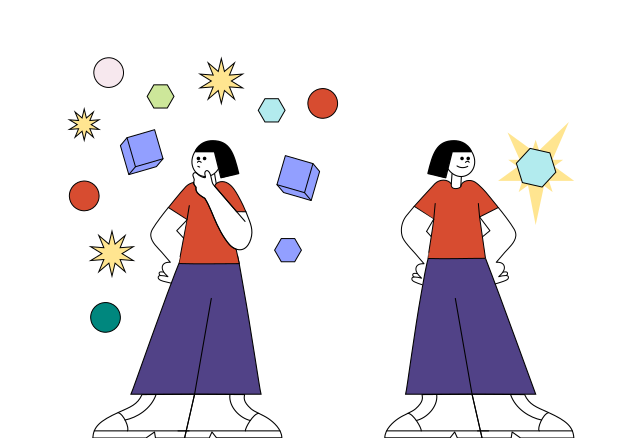
Most teams mix up these two types of thinking, leading to frustration or unintentionally sabotaging good ideas. We can use divergent and convergent thinking to have better ideas, and deliver more successful outcomes.
Divergent thinking is all about opening up possibilities, creating lots of options to choose from, and suspending judgement. The "no bad ideas" stage, where we're spitballing and doing some 'blue sky' thinking.
Convergent thinking is all about narrowing things down, making decisions, and creating a concrete next step.
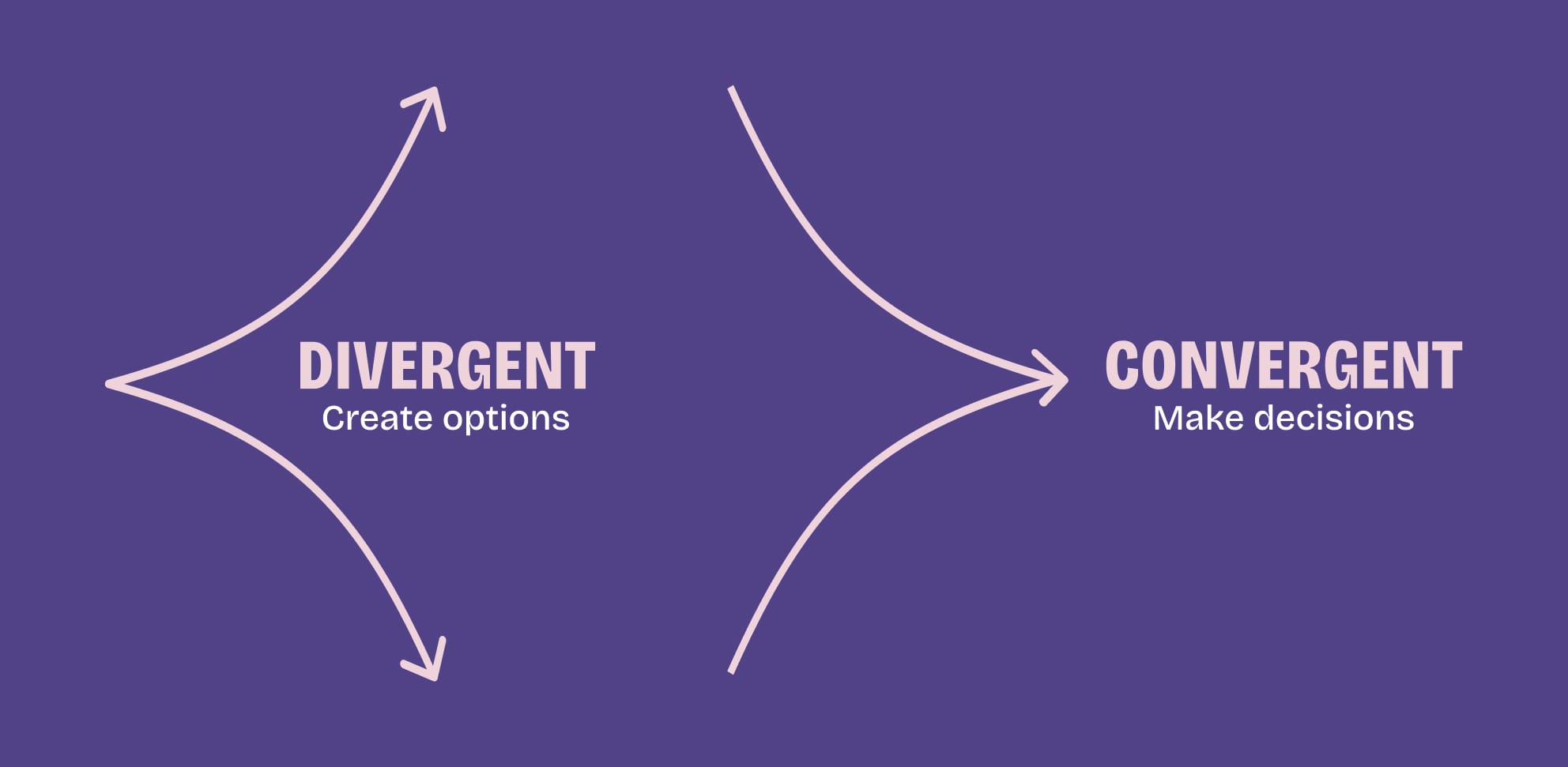
Think about planning a holiday:
- Divergent stage: Where could we go? How long for? When might we go? What might we do when we're there? At this stage, there are endless possibilities, and we're just trying to throw ideas around to see what sticks.
- Convergent stage: We're being decisive - confirming destination, dates, activities, hotels, flights. We're doubling down and making a concrete plan.
Divergent thinking often causes a chain reaction - one idea leads to another, which leads to another. Things evolve and grow, and it's only by thinking broadly that we're able to land on a really juicy idea.
We're not necessarily looking for a "big idea" - in fact going through the process often leads us to a very small actionable next step, that we wouldn't have thought of otherwise.
Why does it matter?
Most teams apply divergent and convergent processes at the same time, mixing up the two ways of thinking.
They might jump into the convergent stage too early - by beginning to plan the first idea that comes to mind, or by judging ideas immediately, before they've had chance to breathe.
Or, teams might converge quickly on what turns out to be a bad idea, which leads to divergent daydreaming and "if only we'd..." later on.
When you're next tackling a challenge or coming up with ideas, it's important to vocalise that divergent thinking is needed first. For example:
- "Let's throw some ideas around"
- "No bad ideas at this stage"
- "Let's do some blue sky thinking"
This encourages psychological safety, crucial for coming up with a volume of ideas and giving you more options to choose from.
Practical exercises
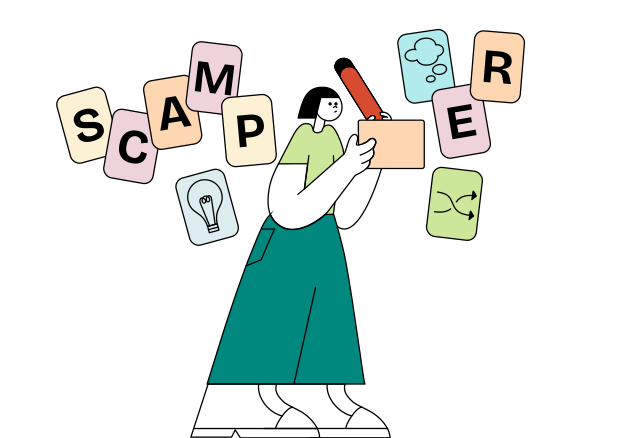
Here are a couple of divergent thinking exercises you can try, for coming up with new ideas:
 Tom Parson
 Tom Parson
And a couple of convergent thinking exercises, to strengthen existing ideas:
Tom Parson Tom Parson