6 ways I'm using AI to be more creative
-
 Tom Parson
A recent report lists curiosity, flexibility and imagination as crucial for 2030. Many believe AI is threatening these uniquely human skills, but can we use AI to improve them?
A few weeks ago I was interviewed by Dr Rachel Connor about using AI to make us more creative. Rachel is a creativity coach, and supports people to be more creative at work.
During the chat, we discussed ways that we can use current AI tools such as ChatGPT, Gemini or Copilot in order to:
- Boost our curiosity
- Make us better at coming up with new ideas
- Give us confidence to think creatively in our work
After all, like any technology, whether AI erodes or enhances our creativity is down to the ways in which we use it.
Here, I distill my thoughts from the conversation into 6 key ways I'm using AI to make me more creative.
1: I'm using AI to make me braver
Firstly, I approach AI as a customisable experience, one which I can tailor to my needs to create an environment where I can flourish.
ChatGPT and other LLMs allow us to configure the way they respond. This is not only useful to adjust politeness, response length, and so on, but also gives us opportunities to get creative with how our AI helps us.
By doing this, I've created an endlessly patient and non-judgmental sounding board, designed around my specific needs.
My AI asks me questions back. It encourages me to reflect on my personal take on the topics we're discussing. It draws parallels with things I've said previously.
This has made me more inclined to ask 'stupid' questions, float ideas without feeling like I need to sound smart, and follow trains of thought that lead to more authentic outcomes.
Having this kind of secret sounding board has made me braver in pursuing many more ideas than usual, especially ones that might not work, before sharing them with others.
2: I use AI to challenge my ways of thinking
Often, our ability to generate new ideas is held back by our assumption that we are already doing things in the best way.
Without getting into detail about the unconscious biases we all share, I think everyone can attest to the value of an outside perspective, a devil's advocate, a second opinion.
And I think we’ve all had times where we’ve taken inspiration from seeing someone else do something we take for granted, in a new and better way. (I, for one, will never cut the top off a pumpkin again)
AI can help with this in a very simple way - simply explain an idea you've had, and then ask the AI to "ask me 3 challenging questions about this idea."
This immediately requires us to interrogate our own thinking and see things in a new way.
Again, we're not looking for AI to give us the answers here. We're using AI simply to start a conversation with ourselves to consider new perspectives. We're using AI as just another tool to guide us to a more robust, strengthened solution.
3: I use AI as a creative coach
When I first started using ChatGPT I, like many, became seduced by its ability to produce content for me.
ChatGPT has clearly been designed to constantly show off its own capabilities. When I ask ChatGPT to give me content ideas, it will usually end its response with an offer to write the content for me or - worse - it will just go ahead and write some content for me, even though I didn't ask it to.
As part of my prompt, I had given ChatGPT examples of previous posts and articles of mine, and asked it to write something in my style. At first, I was impressed by the speed and general sense of authority in the writing.
I started posting these social media posts to my Big Echo company page on LinkedIn, and for a time-strapped entrepreneur I was pretty happy with the results. You can see a couple of examples here and here.
But, when I look back on these posts now, I cringe! They don't really sound like me. They lack personality and originality. They characterise the worst bits of LinkedIn. They are, ultimately, AI slop.
I'm keeping them up for posterity (I think we should all be open about how we're using this technology and growing with it) but I am absolutely not going to use ChatGPT to write content for me as it stands.
Instead, I now use it to teach me how to write better, without ever writing anything for me. I use it more like a writing teacher than a writer.
Learn how I did this in the below clip:
4: I use AI to help with the admin of creativity
Many people think creativity is a lightbulb moment - something that comes deep from within, in a flash of inspiration.
But it's wrong to think of creativity as this singular moment.
Being creative is a slog. Coming up with new ideas involves far more than this single moment of clarity. While the stages of creativity look different for everyone, it broadly involves research, curation, problem definition, ideation, editing and expression or sharing the idea.
There are many parts of this process that can be aided by AI, without diminishing the humanness of the approach.
A bricklayer buys pre-made bricks and uses a mixer to mix the mortar, but we still understand them to be doing the bricklaying themselves.
Same goes for creativity. Of course if we use AI to come up with ideas and we use those ideas as-is, then we're not really being creative.
But if we use AI to give us tools to be more creative ourselves - then we can still rightly take credit for the ideas at the end.
5: AI is making me better at asking questions
When you begin to use AI tools, you quickly learn that rubbish in = rubbish out.
Sometimes, I'm lazy when I use AI.
I put in a pretty bare bones prompt, because I'm being impatient and I just want the AI to give me something useful without having to think about it. This invariably results in a response that is confident but vague, and reads more like someone trying to sell me snake oil.
Over time, I have become much better at prompting AI to give me useful results. I add more context, I explain what kind of response I'm expecting, I provide links to surrounding information, I make my instructions very specific.
Ultimately, using AI has taught me to think through my requirements in much more detail, to think what I really want to know, and to be better at asking for what I need.
The clip below explains how AI has the potential to make us more curious and more inclined to ask questions.
6: AI is making me excited to be creative
I am a technology optimist, I can't help it.
When a new technology comes along my first thought isn't "oh no, we're doomed, take me back to the 90s with cassettes and dial up internet."
My first thought is "cool! how can I use this to help me do the things I care about?"
At Big Echo, we live the philosophy that everyone can be creative, and innovation is for everyone.
Creativity is like any other learned skill - the more you do it, the better at it you become.
Therefore, we are excited by anything that gets us inspired to be creative, play, experiment, and come up with new ideas.
It’s self-fulfilling - the more I use AI to be creative, the more excited I am to be creative.
We've seen this before
When a new technology emerges, we often see a period of discovery and adjustment while we figure out how to use it.
One notable example is the smartwatch. When smartwatches were first released, they were marketed with a scattergun approach - you could use them to set timers, track workouts, communicate with friends, control your TV, and so on. These days, we all pretty much agree smart watches are primarily fitness trackers, and they’re now marketed as such.
Right now, we’re in the scattergun phase. LLMs like ChatGPT and Gemini are being marketed as magical do-everything solutions. Ultra convenience. You barely even need to think, just let the AI do it for you.
But at some point (soon, I hope) we’ll start to agree that while AI is impressive at a number of things, it isn’t a silver bullet for everything.
My recommendation during this phase is to disregard what OpenAI, or Microsoft, or Google want you to do with AI. Instead, try to bend it and break it and use it in ways that you find genuinely interesting.
Approach this fast-moving, unpredictable and exciting era of AI with curiosity and playfulness, and see where it takes you.
Watch the full interview on YouTube below:
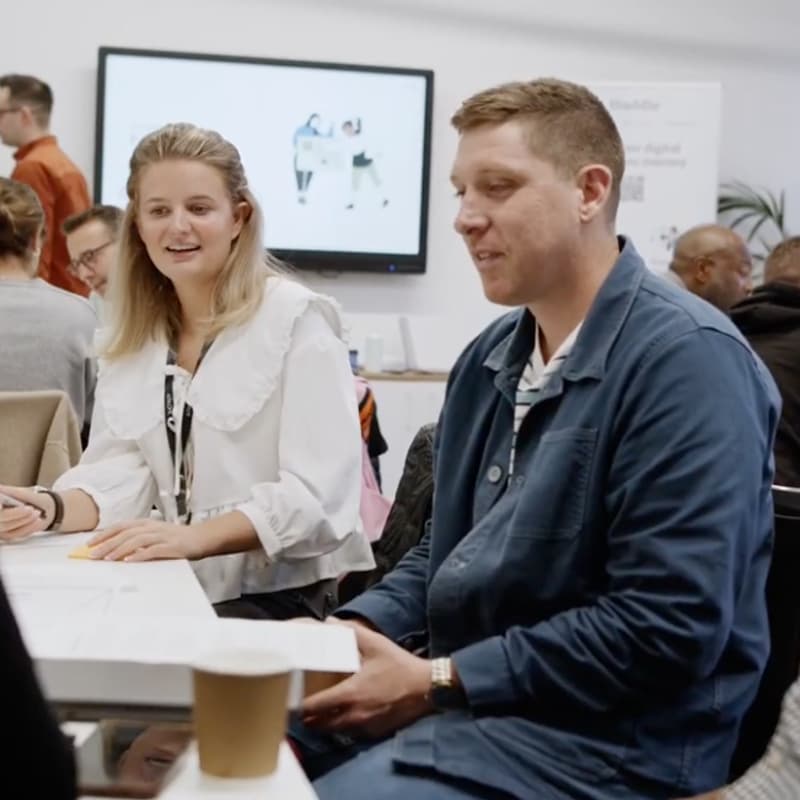
Want to get hands on using AI to be more creative?
I am running a hybrid workshop / networking event that will teach you practical skills to use AI to be better at coming up with ideas.
The event takes place on 21st January 2026 in Manchester, UK.