Many of us have ideas about how to be better, but haven't acted on them out of fear of getting it wrong and wasting time, money and goodwill. When did we start to fear our own ideas?
The best tacos
I remember a time recently when I was working in the city for the day and had spontaneously decided to stick around after work for some dinner with a friend. We were both craving Mexican food, so I fired up Google and typed in: "best Mexican restaurants near me."
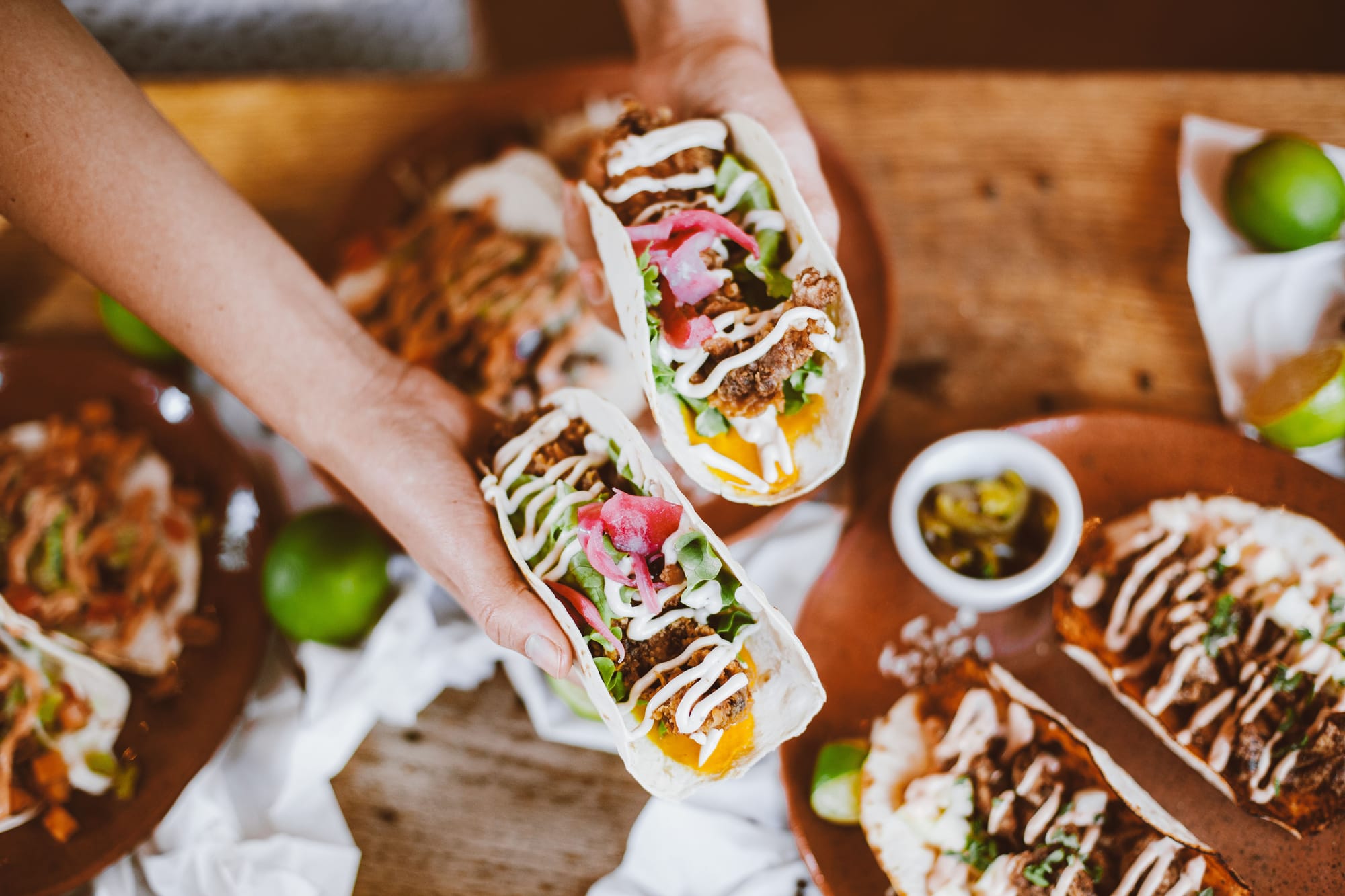
I found myself spoilt for choice - three viable options, all with at least a 4.5 review average, all with delicious-looking photography, all with tables available. Even after scouring reviews and zooming into photos I'm still stuck.
How should I make the decision on where to go? How do I know which is really the best option?
The best is yet to come
One thing we've long been taught is that we're doing it wrong.
Anyone with something to sell - a product, or just their ego - will try to convince us their way of doing things is best. The best overnight oats recipe, the best TV series to watch right now, the best colours to wear for your skin tone.
This has even leaked into very personal decisions: we still look for the best gift idea for a loved one, the best route to work, the best area to live.

The amount of information available to us has completely exploded. By way of example, between 2000 and 2021, the number of websites went from 17 million to 1.9 billion - a 112x increase. There was a time when I'd consider myself someone who likes to 'consider all my options' - but I've come to accept that this is completely unfeasible in the Information Age.
When there is so much choice, and we have so little time, it's so tempting to shortcut straight to the 'best' choice, and rely on others to get us there.
But I dread to think how many hours of my life I've wasted trying to decide which restaurant will give me the best tacos, when I could have spent that time eating tacos!
Best practice
In some cases, there is legitimately a best practice, especially when we're talking about regulated industries or those with compliance requirements.
But in most cases, 'best practice' is a comfort blanket we use to avoid making a decision.

When I ran my digital agency, I came up against this term frequently. Clients would ask me what best practice is in a given situation. When facing internal disagreement or a tough decision, best practice was sought to save the day.
I was frequently reminded of Douglas Bowman, a lead designer at Google, who resigned after the company's aggressive focus on data over design - in one case comparing 41 shades of blue for a button. And that was in 2009. Is this data-driven decision making gone mad?
Early in my career, I would explain to clients that for many of these decisions there isn't really an agreed upon best practice, because this is your website, for your customers, with all of your context. It's highly personal, and there are pros and cons either way. It's about choosing what's right for you.
They looked at me dubiously.
Eventually, I started to take all of that context, use it to decide for them what they should do based on my years' of similar projects, and confidently claim that best practice is this particular way because of benefits A, B and C.
Clients were much happier with this. In the end, they just needed someone to tell them what 'best' looked like so they could get on and do it. And funnily enough, if the CEO had a strong opinion, this usually became the agreed-upon best practice anyway.
Fear of getting it wrong
Many of the clients I now work with have been clinging to 'best practice' for years. The status quo. The safe way that they know works, even if it doesn't work that well.
They have ideas about how they could change - do better work, get better results, be happier. But they're worried that their ideas won't work out. They don't have any evidence that they'll work - just a hunch.
They don't want to risk getting it wrong and wasting time, money or the goodwill of their clients or team. So they've been sticking to the tried and true to avoid any of that.
But those ideas don't go away. And there comes a time when you owe it to your stakeholders, your business, and yourself to pay attention to them. To take a leap of faith. To at least open up that box and see if there's anything viable inside.
Permission to act
It's a combination of things that leads us to be scared of our ideas:
- Way too many options
- The best practice comfort blanket
- Fear of getting it wrong
So when looking for the 'best' Mexican restaurant, I really needed to just put my phone down and decide.
Move past the worry of choosing a slightly inferior Mexican restaurant. Because I will have delicious tacos and a lovely night in any of those restaurants.
Next steps
So how can you move past your fear of getting it wrong? Here are some resources to get you started.
 Tom Parson
 Tom Parson
 Tom Parson
Read next
Big Ideas · 5 mins
3 steps to meaningful change
Three key phases can describe all of the meaningful changes in my life - including weight loss, learning to code, releasing my first album, and running a business.
Big Ideas · 5 mins
When did we become scared of our own ideas?
Many of us have ideas about how to be better, but haven't acted on them out of fear of getting it wrong and wasting time, money and goodwill. When did we start to fear our own ideas?
News · 6 mins
My Story
My journey starting, scaling and closing a business over 10 years - and what I did next.